
The following article is from the Advanced Heart Failure referring provider newsletter.
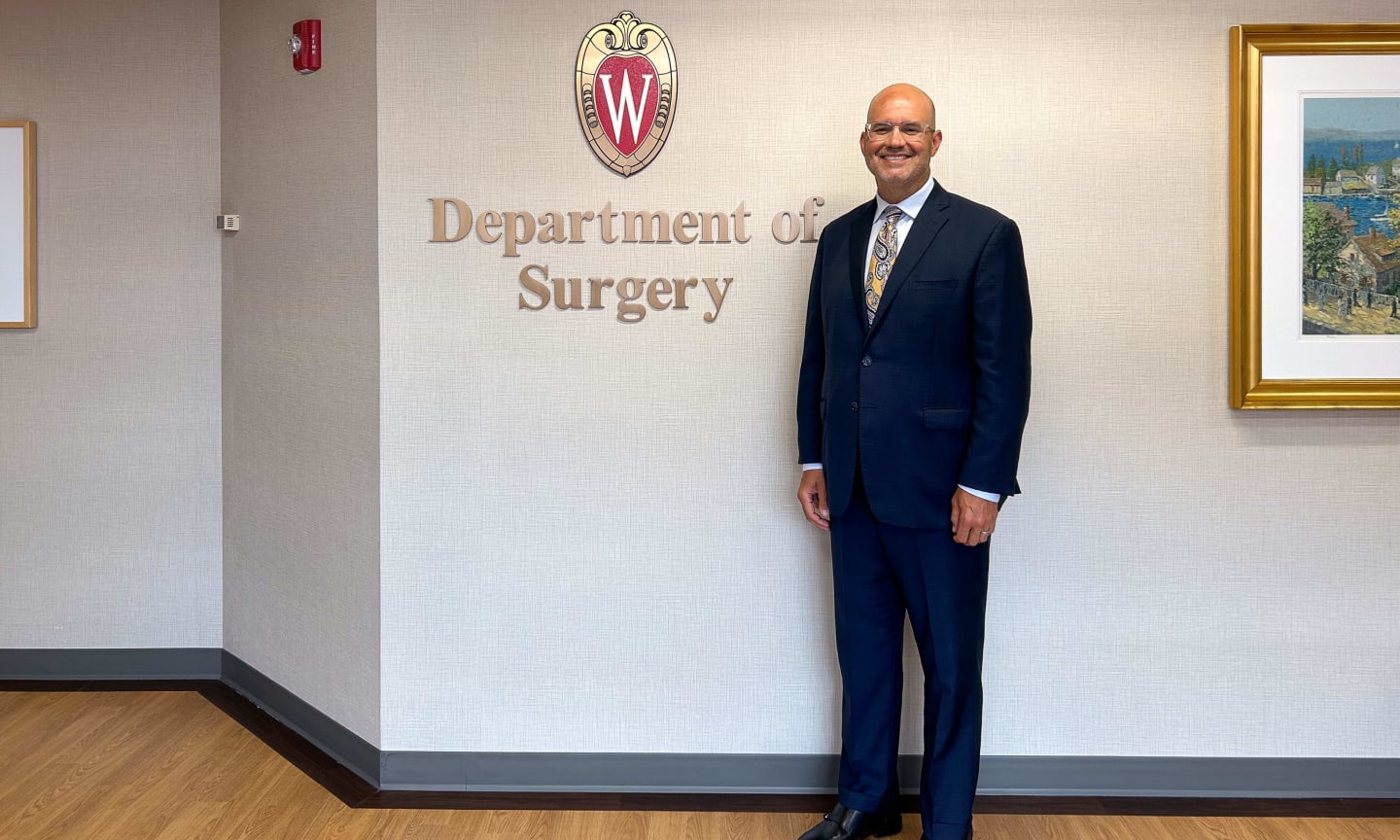
Dr. John Stulak, a renowned cardiothoracic surgeon, joined UW Health in June 2025, coming from Mayo Clinic in Rochester, Minnesota, where he served as the surgical director for three years.
“I came here because of this organization’s people and team approach,” he said. “Every LVAD and transplant group runs as a team, but these particular team members were extremely supportive and selfless. As we were talking about patients, I came to understand how much empathy they have. The patients weren’t just names—they were people we could help in a very profound way.”
Surgical specialties
A graduate of Temple University School of Medicine in Philadelphia, Pennsylvania, Dr. Stulak completed both his general surgery and thoracic and cardiovascular surgery residencies at Mayo Clinic. He also completed a cardiac transplantation and mechanical circulatory support fellowship at University of Michigan in Ann Arbor, Michigan.
While he performs a wide range of adult cardiac surgeries, Dr. Stulak’s clinical niche is in coronary artery bypass grafting—especially multiple arterial vascularization. He has specialty training in surgical treatment of advanced heart failure, including:
High-risk conventional corrective heart surgery
Mechanical circulatory assistance
Heart transplant
LVAD as destination therapy
In the realm of advanced heart failure, Dr. Stulak believes that even if patients are not candidates for transplant, they can still lead a fulfilling life. Durable left ventricular assist devices (LVADs) are an excellent option for destination therapy, he said.
An increase in the use of LVADs as destination therapy is one of the changes he will be bringing to the Advanced Heart Failure Program.
When organ allocation laws changed in 2018, it became more difficult for Midwestern advanced heart failure patients to receive a donor heart. While they’re waiting, some patients benefit from short-term treatments that assist with circulation, such as extracorporeal membrane oxygenation (ECMO) or temporary LVAD devices, such as the Impella.
“But you have to have certain criteria to put a patient on ECMO,” said Dr. Stulak, “and now the more durable LVADs are less common as a bridge to transplant.”
Instead, he suggests, durable LVADs should be seen as a viable destination therapy for those patients who don’t qualify for transplant. “If referring physicians have a patient who is not a candidate for heart transplant, we are happy to evaluate them for destination therapy at UW Health,” he said. “The current commercially available durable LVAD is the one that has demonstrated the least burden of complications historically.”
A culture of access
Dr. Stulak says his vision is to create a culture of access in the UW Health Advanced Heart Failure Program—actively partnering with referring providers to give patients the best care possible.
“We owe this to our patients,” he said.