
By definition, living with cancer is tough. Some capture its essence in two words: Cancer sucks.
Historically, we tend to associate cancer with its impact on the physical side of the body — pain, fatigue, changes to the body and the frequently unpleasant aspects of treatment.
The physical, however, is just one half of the mind-body connection. For too many people, dealing with a cancer diagnosis also takes a large toll on their emotional well-being. Few medical conditions leave patients with as much uncertainty, especially just after diagnosis, when the mind swarms with questions, worries and a sense of isolation.
Some of the most common mental health aspects of cancer include:
Confronting one’s own mortality
Apprehension about treatment
Anxiety and depression
Sleep disruption
Physical body changes, such as loss of hair or breasts, and the impact on body image
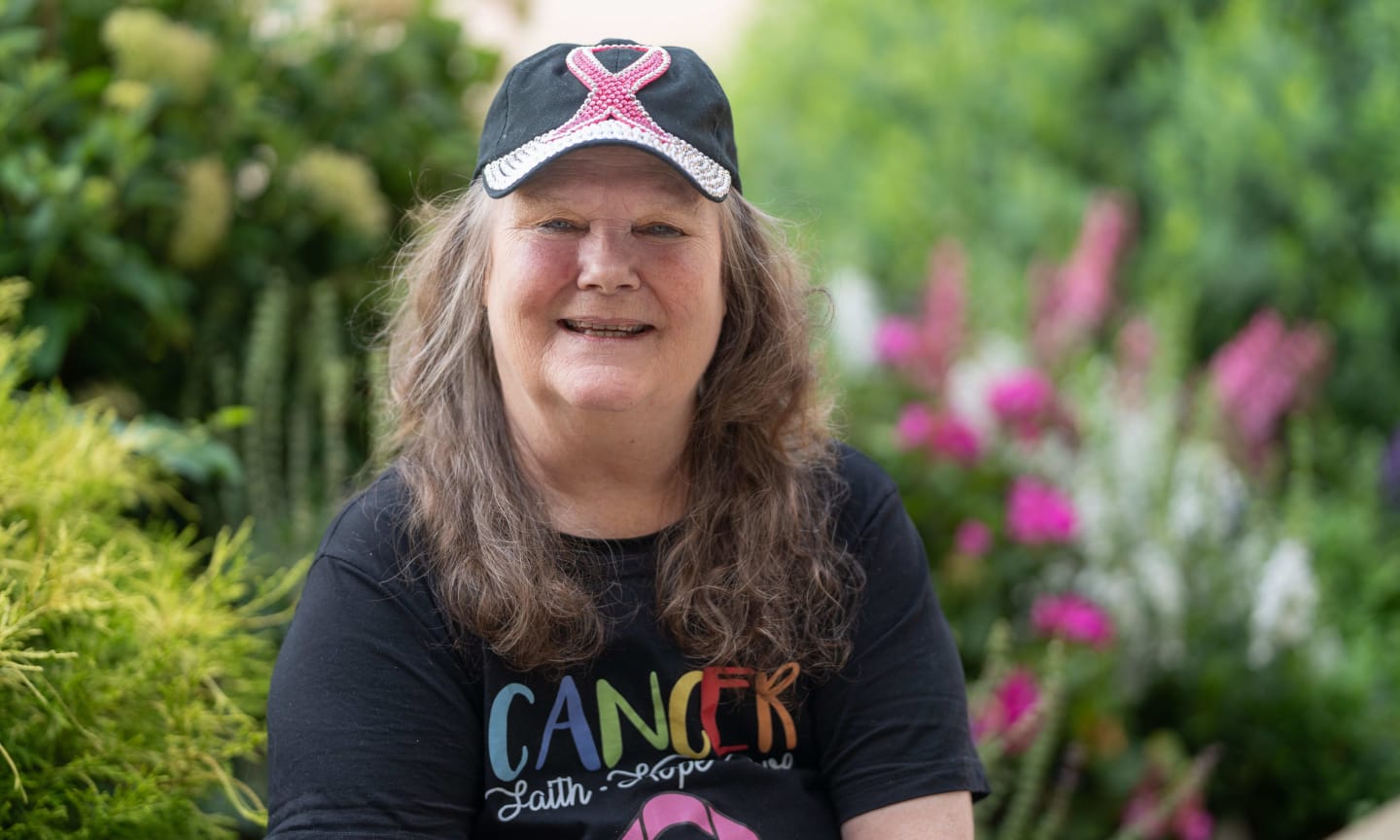
For Ellen Borst, a 62-year-old Madison woman with great inner strength, being diagnosed with breast cancer in late 2021 felt like the worst day of her life. Unfortunately, her diagnosis would be just the first of several incredibly difficult events she would endure over the next 12 months.
During that year, Ellen lost three loved ones — both of her parents and her 64-year-old sister Becky, with whom she was very close. Losing any one of these people would have been hard enough, but seeing all three pass away while Ellen herself was undergoing three breast cancer surgeries, chemotherapy and radiation was extraordinarily stressful. She also went through 14 sessions of preventative immunotherapy. Throw in losing her hair during chemotherapy and both breasts following her double mastectomy, and it’s no wonder Ellen’s emotional well-being felt at rock bottom.
Fast forward a few years, and thanks to an expanded behavioral health program at the UW Health | Carbone Cancer Center — Wisconsin’s only NCI-designated comprehensive cancer center — Ellen and countless cancer patients like her are managing life more courageously and more confidently.
Many cancer patients face emotional challenges
“Cancer is hard, and we know from the literature that 30 to 40 percent of cancer patients can benefit from psychological treatment,” said Rachel Edwards, director of Behavioral Health Services at UW Health.
“Our cancer patient volume has been growing steadily, and we simply didn’t have enough staff to meet the behavioral health needs of our patients."
In conjunction with the 2024 opening of Eastpark Medical Center in Madison, where many cancer patients are now treated, UW Health added three new cancer health psychologists.
“What makes the program so ideal is that our cancer health psychologists are right here in the cancer clinic,” Edwards said. “Patients are not left to search outside UW Health for mental health services on their own.”
The goal, Edwards said, is to provide behavioral health services to any patient that needs it. Video appointments are also available, which can be especially convenient for patients who travel from longer distances.
Despite being more than two years removed from clinical treatment, Ellen’s doctors recommended her for the program in 2025. Over the course of several months, Ellen met regularly with Travis Daniel, PsyD, one of the newer UW Health cancer health psychologists.
“Ellen went through so much loss in a short time,” Travis said. “The double mastectomy deeply affected how she saw and felt about her body. We helped Ellen boost her self-confidence during our sessions, which included a series of self-compassion exercises and practical tools for managing thoughts and behaviors.”
Ellen can’t say enough about how much Travis did for her self-confidence.
“For me, fighting cancer was 90% mind and 10% body. Travis helped me gain wisdom about my body and come to appreciate that my breasts are not everything,” she said. “I feel much more comfortable with my body now.”
Tremendous support from her workplace
Aside from her husband Remmert, her two grown sons, many friends and relatives, Ellen also received tremendous emotional support from her co-workers and countless members at the West Madison YMCA, where she has worked at the front desk for more than 18 years.
“The YMCA is not just the place of Ellen’s job,” said West YMCA Executive Director Katie Martinelli. “It’s her second home. She feels safe, comfortable and loved here, and on most days, work is not a burden for her. We all wish we could clone Ellen. She really loves her job.”
Incredibly, just a little more than a week after her double mastectomy, which was performed by UW Health | Carbone Cancer Center surgeon Dr. Heather Neuman, Ellen was back at work.
“I was supposed to miss a month, but I only missed a week,” she said.
Ellen is doing better these days, both physically and emotionally. She is grateful for Travis, Dr. Neuman and every doctor, nurse and therapist from UW Health who has helped care for her — mind and body.
Like anyone who has been through so much difficulty, some days are still challenging.
“I try to be grateful for what I have,” she said. “I also find walking and listening to music very helpful. I love country, I love Springsteen, I love AC/DC, but when I feel edgy, I’ll put on a symphony, light a few candles and gaze into them. Then I say, 'It’s going to be OK.' ”