Aviso
Welcome Beaver Dam patients! For information about the transition to UW Health, please review our frequently asked questions page.Read more
Utilizamos cookies en este sitio para mejorar tu experiencia y nuestras estrategias de marketing. Si continúas navegando sin cambiar la configuración de tu navegador para bloquear o eliminar las cookies, aceptas el almacenamiento de cookies y tecnologías relacionadas en tu dispositivo.Más Información
Welcome Beaver Dam patients! For information about the transition to UW Health, please review our frequently asked questions page.Read more

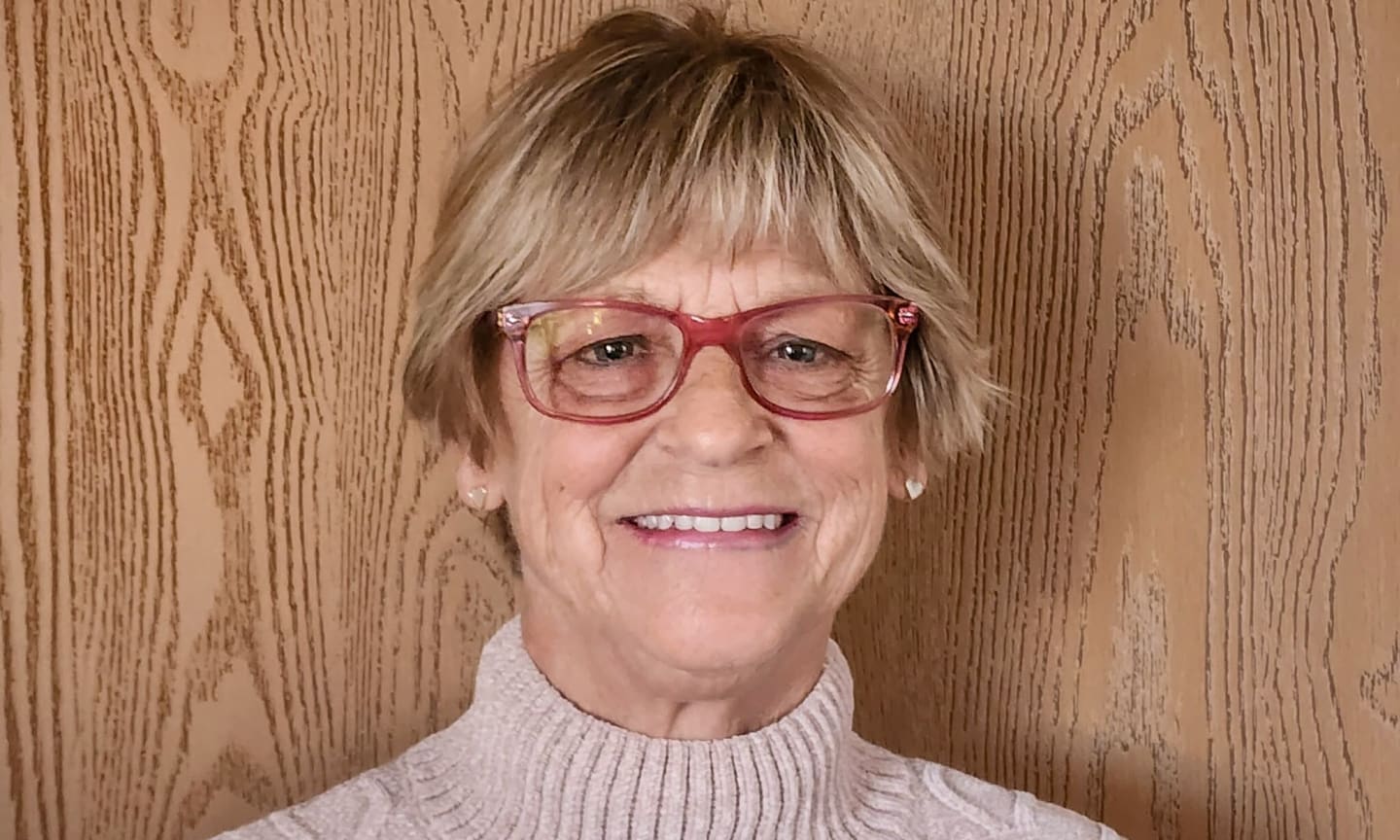
For Leslie Davis, the simple act of breathing had been a struggle for more than 20 years. Life with emphysema, a form of chronic obstructive pulmonary disease (COPD), meant constant shortness of breath — not to mention several hospitalizations for pneumonia, bronchitis and allergy-related infections.
Today, Leslie is breathing easier and feeling better than she has in decades, thanks to UW Health’s interventional pulmonology team, which performed a minimally invasive procedure to relieve her shortness of breath.
A retired pediatric nurse, Leslie, 64, grew up in a household where she and five of her six sisters started smoking as teenagers. Their mother died of lung cancer at age 59.
Leslie, who lives in Polo, Ill., was 45 when she was diagnosed with emphysema. The disease causes damage to the tiny air sacs in the lungs, leading to them losing their “springy” quality, which helps move air in and out of the body. The extensive damage to Leslie’s air sacs caused air to become trapped in her lungs, making it harder to exhale.
Smoking is the leading cause of emphysema and almost certainly contributed to Leslie’s disease.
Over time, Leslie managed her disease with inhalers and pulmonary rehabilitation. By 2023, however, her emphysema became severe enough that she qualified for a more advanced treatment available primarily at larger medical centers.
For years, the only options for patients like Leslie were lung volume reduction surgery, which requires a longer hospitalization and recovery, and lung transplantation, which is the most invasive form of treatment.
Leslie’s local pulmonologist referred her to Dr. David Sonetti, a UW Health interventional pulmonologist who offered Leslie a less-invasive, lower-risk treatment known as bronchoscopic lung volume reduction. BLVR, as it's known for short, takes about an hour and typically involves a shorter hospital stay and a faster recovery.
A patient must undergo a series of tests managed by the interventional pulmonology team to ensure they are a good candidate for BLVR. Like all patients who decide to go forward, Leslie agreed to stop smoking at least four months before the procedure and committed to remaining tobacco-free afterward to provide the best possible quality-of-life improvement.
With BLVR, the interventional pulmonologist inserts a thin tube with a camera at the end down the throat and then places a series of small, umbrella-shaped valves into the most diseased area of the lung. These valves are one-way, only letting air out of the treated part of the lung while preventing new air from coming in.
In time, the heavily diseased part of the lung slowly deflates, stops working and takes up less space. This frees up more room for the healthier parts of the patient’s lungs to take over, making breathing easier and more efficient.
Patients typically spend a minimum of five days in the hospital following the procedure to ensure their lungs continue functioning properly and to monitor for any complications, including pneumothorax, a type of lung collapse that can occur after BLVR.
Leslie’s pulmonary function increased from 31% to 54% after undergoing BLVR — a result considered a remarkable improvement.
“Dr. Sonetti was so good,” Leslie said. “He was never in a hurry and was so polite. He made me feel so comfortable and described everything about the valve procedure to a ‘T.’ ”
Not every patient with COPD qualifies for the procedure, and not every BLVR patient has the same outcome, but Leslie was incredibly grateful to feel significant relief soon after waking up from the anesthesia.
“Generally speaking, someone like Leslie will enjoy continued benefit from the procedure for years to come,” Dr. Sonetti said. “She has been dong great, and our hope for every patient is to experience an outcome like hers.”
Leslie emphasizes the importance of staying active after the procedure.
“You have to exercise,” she said, noting that she continues to attend pulmonary rehab, where her exercise routine includes a mix of treadmill walking and the use of a step machine that looks like a recumbent bicycle. She also exercises five days a week.
In addition to quitting smoking, Leslie now avoids being anywhere near secondhand smoke whenever possible.
“Five of my six sisters were smokers, like me, and only one of them still smokes today,” Leslie said. “Anyone who comes to my house and wants to smoke has to go outside.
“My family has made a huge turnaround in life.”