Notice
Welcome Beaver Dam patients! For information about the transition to UW Health, please review our frequently asked questions page.Read more
We use cookies on this site to enhance your experience and improve our marketing efforts. By continuing to browse without changing your browser settings to block or delete cookies, you agree to the storing of cookies and related technologies on your device.Learn More
Welcome Beaver Dam patients! For information about the transition to UW Health, please review our frequently asked questions page.Read more
October 1, 2025

Cancer is a growing problem for low- and middle-income countries, which make up about 63% of the world’s population.
While wealthier countries have been advancing cancer prevention, detection and treatments that save more lives, there is a significant hurdle in how to reasonably scale and deploy these resources in countries facing hurdles like poverty, access to medical care and cultural mistrust.
The UW Carbone Cancer Center Global Oncology Program joins other academic centers, governmental agencies and humanitarian groups around the world collaborating on practical solutions and policy initiatives to ensure equitable cancer prevention and treatment access.
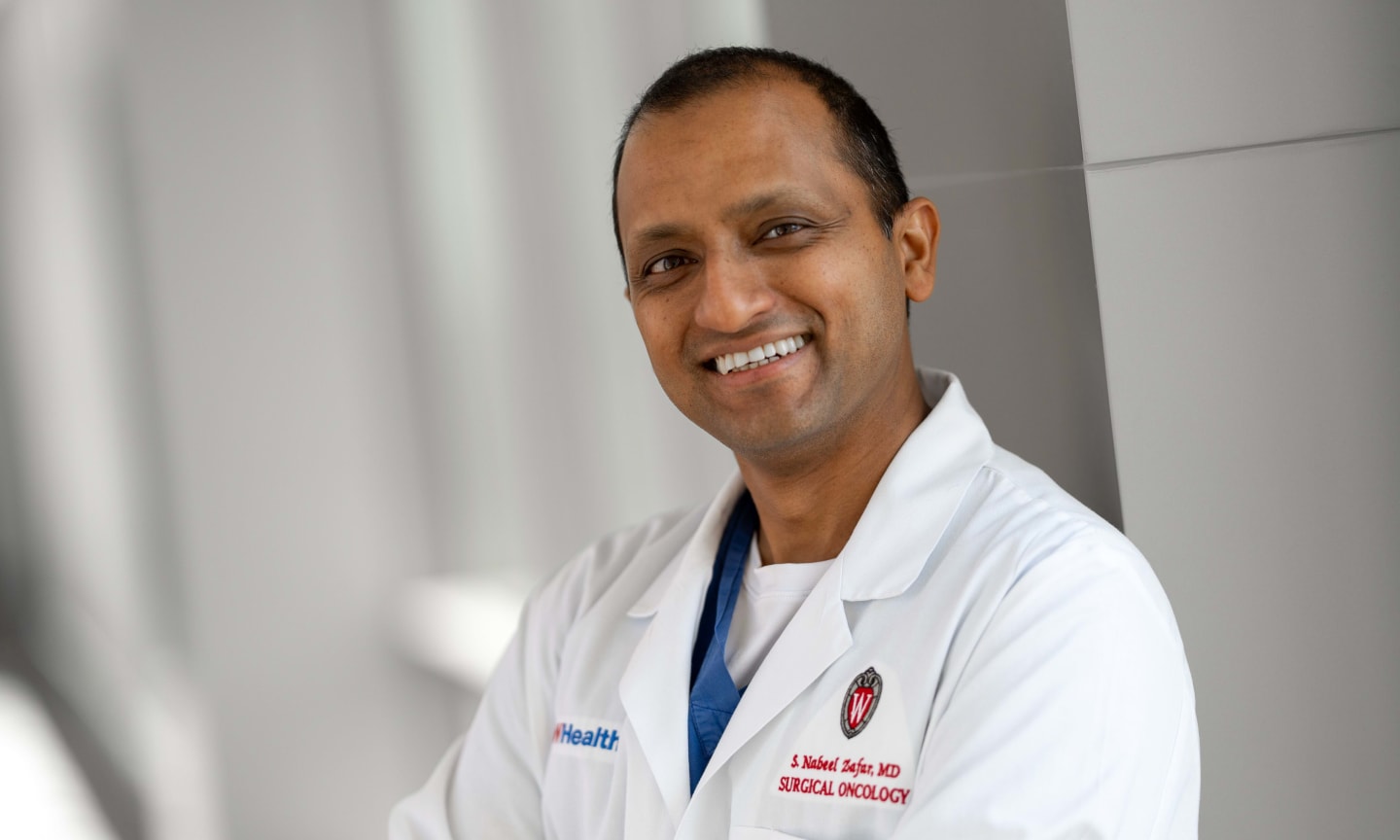
Dr. Nabeel Zafar, a surgical oncologist specializing in gastrointestinal cancers, leads UW Carbone’s program and is focused on growing global oncology education opportunities, supporting existing research and encouraging new ideas and fostering collaborations among researchers at UW and beyond.
Learn more about how UW Carbone researchers are making an impact abroad:
Zafar co-authored a Lancet Oncology Commission on Global Cancer Surgery report with practical initiatives that promote safe, timely and accessible cancer surgery for patients in any part of the world. Zafar also has been building research capacity in Pakistan and Ethiopia by training cancer providers on research methods. Additionally, he is studying barriers to guideline directed cancer care including financial toxicity from cancer care in Ethiopia.
UW researchers are involved in creating region-specific cancer registries to identify trends that can inform policy making and direct appropriate use of limited resource. They are also tracking existing research funding to pinpoint where gaps exist.
Muhammed Murtaza, PhD, is developing a low-cost shelf stable blood test that can capture cancer DNA fragments for cancer screening and early detection. By creating a technique that can screen a dried drop of blood, they eliminate the challenging logistics of keeping a liquid blood sample at a controlled temperature. This test is being piloted in Pakistan.
Robert Jeraj, PhD, has long been a global leader in imaging and medical physics programs. He has been active in relationship building and charitable efforts to improve access, safety and efficiency of medical radiation use in low-to-middle income countries.
Shannon O’Reilly, PhD, is launching a public education campaign about cervical cancer screening and prevention in Ghana. The goal is to address misconceptions and mistrust about getting vaccinated against human papillomavirus (HPV), which can cause cervical cancer and other cancers.
Minh Tung Phung, PhD, is also leading cervical cancer screening and prevention efforts in Vietnam, part of his overall work in addressing barriers in women’s cancer prevention and care.
Dr. Christian Capitini and Krishanu Saha, PhD, are developing a platform to expand access to CAR T-cell therapy in India and Colombia. This immunotherapy treatment is used in blood and lymphatic cancers.