
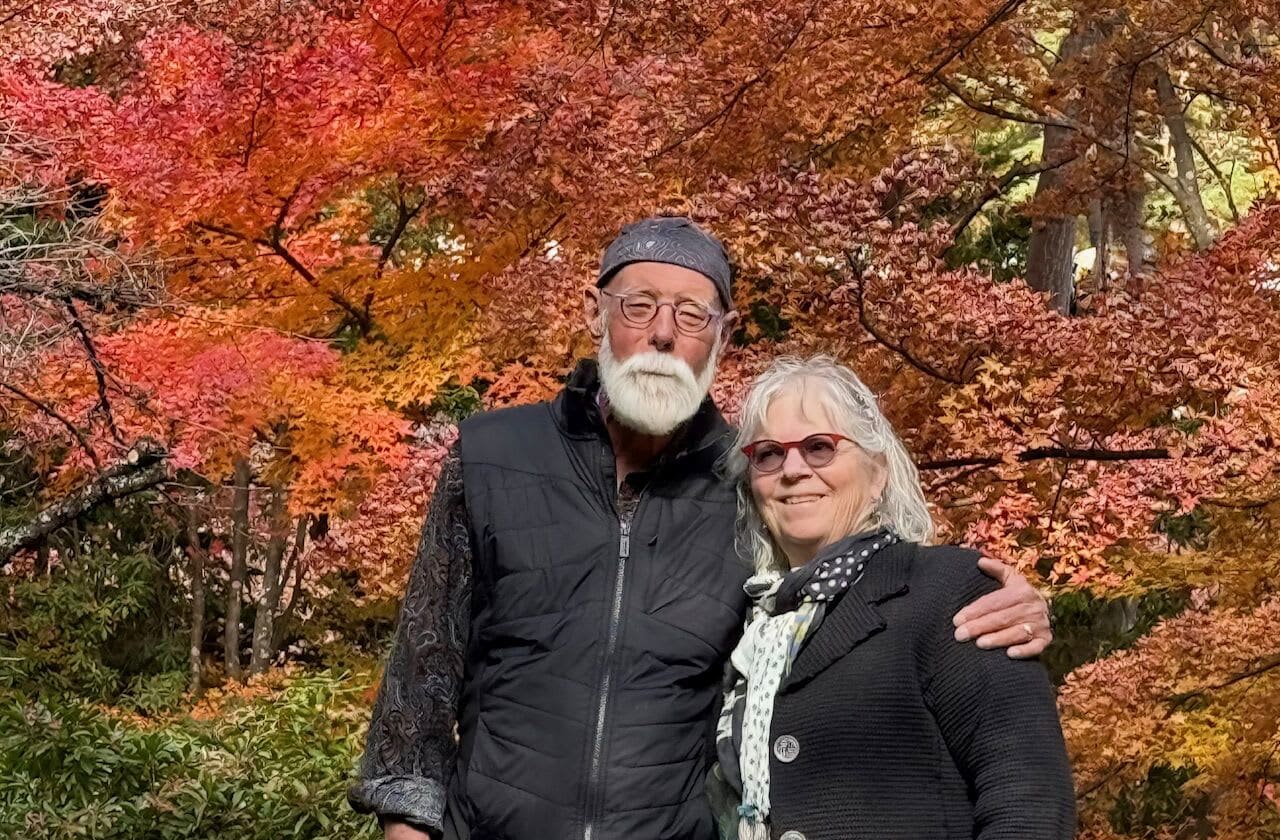
After receiving a rare male breast cancer diagnosis in 2014, Joe Clark underwent a mastectomy and 12 weeks of chemotherapy. When he finished treatment and had several clear scans, Joe thought his fight with cancer was over.
However, just over two years later, a dermatologist noticed an unusual spot on Joe’s thigh. The spot turned out to be stage 1 melanoma that was successfully removed. These diagnoses were actually the first of many steps in Joe’s persistent fight against cancer, a battle that continues today.
Since 2014, Joe has received five separate cancer diagnoses, meaning that none of the new cancer locations spread from preexisting cancers in the body. Still, Joe’s spirit and energy remain high.
“I feel good, and I’m feeling better every day,” said Joe, 73, of Baraboo, Wisconsin. “I've never let it get me to the point that I could think about giving up.”
In 2022, Joe spent his 70th birthday at an emergency room suffering from intense abdominal pain. A CT scan showed small tumors in the small intestine and spots in his right lung, and Joe was diagnosed with a rare form of gastrointestinal cancer affecting his small bowel. He also was found to have a separate tumor in the right lung.
Because of his dual lung and bowel cancer diagnosis, Joe’s treatment plan was coordinated by Dr. Toby Campbell, thoracic oncologist and professor of hematology, medical oncology and palliative care at the University of Wisconsin School of Medicine and Public Health, and Dr. Nataliya Uboha, gastrointestinal oncologist and associate professor of hematology, medical oncology and palliative care.
Joe’s initial treatment plan included chemotherapy, immunotherapy and radiation on the lung tumor. While still undergoing treatment for these two cancers in 2024, Joe’s doctors discovered a fifth, unrelated cancer — this time in his liver.
With the unique nature of Joe’s treatment needs, Campbell submitted the case for a large specialist team review by UW Health oncology care experts who tailored his treatment plan.
“Because he has multiple cancers at the same time, he's on a totally nonstandard, individualized, treatment plan,” Campbell said. “It’s working. Lots of eyes are overlooking our treatment plans for him and you can only get that at a place like UW.”
While Joe’s intricate, personalized treatment plan has prevented the liver and bowel cancers from spreading, the team noticed spots on the lymph nodes and brain last summer. After a biopsy, it was confirmed that Joe’s lung cancer had metastasized or spread to those sites.
In October 2025, Joe underwent 10 rounds of whole-brain radiation, led by radiation oncologist Dr. Andrew Baschnagel, associate professor of human oncology at UW School of Medicine and Public Health. Joe’s latest scan in February showed good news: the brain lesions had not grown and there were no new spots.
“I have nothing but great things to say about the Carbone Cancer Center and all of the doctors that I've worked with there,” Joe said. “Dr. Uboha, Dr. Campbell and now Dr. Baschnagel — they've all been fantastic.”
Joe is thankful that his team’s aggressive and individualized treatment plan is allowing him get back to his favorite hobbies. Working as a public school art teacher in Wisconsin Rapids for over three decades, Joe has a deep passion for art. He now has his own art studio in Baraboo, which he shares with his wife, Nancy.
“The radiation took all my energy for a while, but only for about a month,” Joe said. “I’m definitely starting to feel a rebound.”
Joe, who primarily works with pottery and ceramics, now has the energy to stay busy in his studio. He recently finished a large commission from the Wisconsin Art Education Association, creating more than 80 ash glaze pieces to be sent across the state as awards.
For his latest project, Joe’s teaming up with the Empty Bowls organization in Baraboo to create ceramic bowls, with the profits donated to local food pantries. Despite his diagnoses, Joe is busier than ever in the studio.
“For many people with advanced incurable cancer, they’re very diligent about their treatment, but they forget to actually live,” Campbell explained. “Joe is a great example of someone who's using treatment to live their life every day.”