
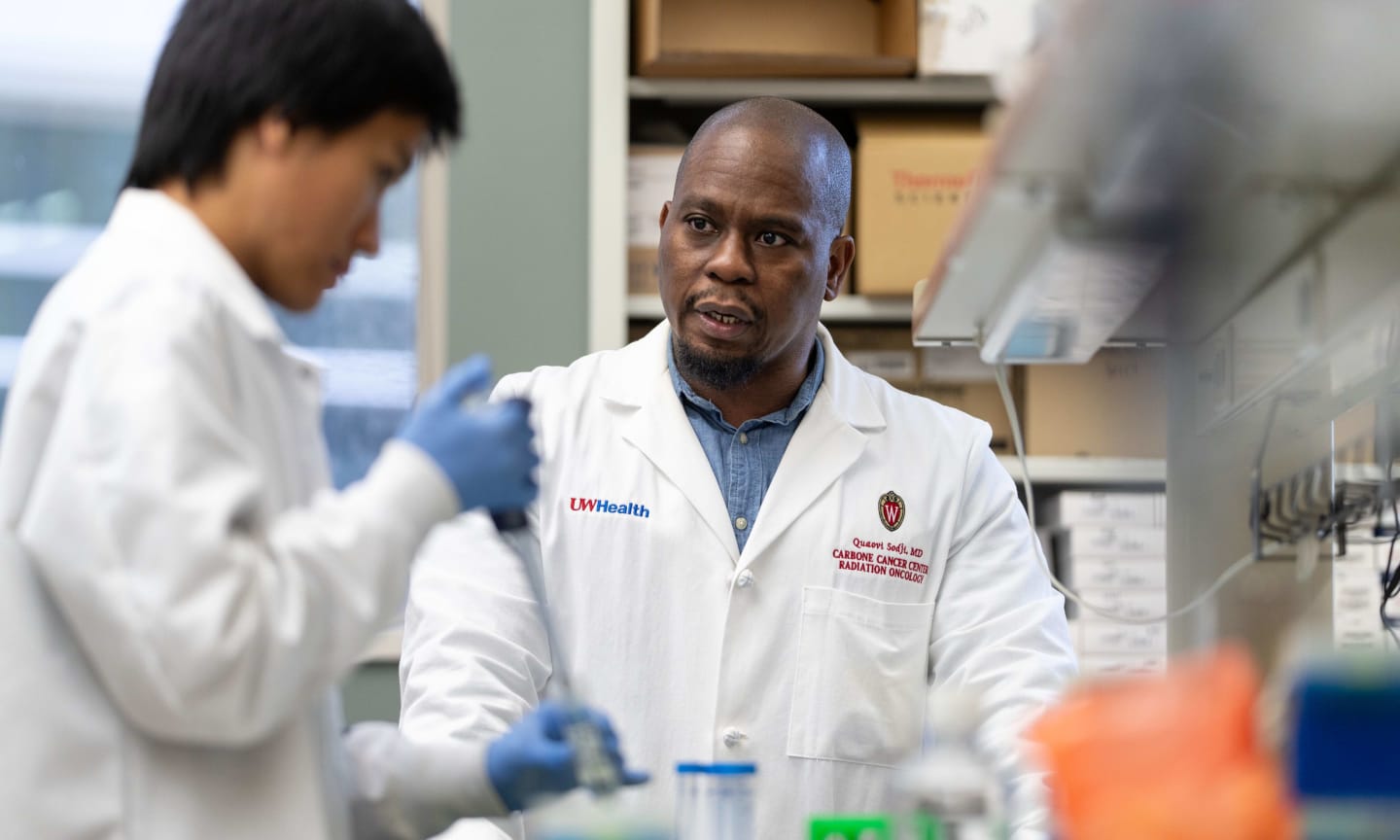
Cell therapies use engineered immune cells that can better seek and attack cancer cells. While this approach has made significant progress in treating patients with select types of cancer, it has some limitations.
UW Carbone Cancer Center researcher Dr. Quaovi Sodji seeks to boost cell therapy effectiveness through a combination approach with radiopharmaceuticals, which use a radioactive molecule designed to seek out cancer cells and deliver precision radiation treatment.
“My goal is to be able to combine these two technologies that seem to be a bit different from each other and potentially negative to each other and see how we can make those two work effectively in patients,” said Sodji, an assistant professor in the UW Department of Human Oncology.
Sodji’s work is guided by his experiences at UW Carbone working in the labs of Dr. Christian Capitini, a physician-scientist who develops cell therapies for pediatric cancer treatment, and Dr. Zachary Morris, a physician-scientist focused on how radiation treatments can enhance the effectiveness of immunotherapy.
Both cell therapies and radiopharmaceutical therapies have become significant tools in cancer treatments. Cell therapies, such as chimeric antigen receptor T-cells (CAR T-cells), are given to treat blood and lymphatic cancers in children and adults. Radiopharmaceuticals are currently used in a range of cancer types, including neuroblastoma (a pediatric cancer that affects nerve tissue), prostate, thyroid and neuroendocrine cancers.
CAR T-cells are made from a patient’s own T-cells, a form of white blood cell that attacks threats in the body. The cells are collected through a blood draw and modified to better fight cancer cells. After chemotherapy to weaken cancer cells, those CAR T-cells are infused back in the patient to kill those bad cells.
Sodji’s research aims to use radiation delivered by radiopharmaceuticals to not only weaken cancer cells but also enhance CAR T-cells’ ability to kill them. The timing of this approach is essential: administering CAR T-cells too soon means the radiation could kill those helpful cells and decrease that treatment’s effectiveness. However, waiting too long to administer CAR T-cells can give the cancer cells a chance to rebound from the radiopharmaceutical’s effects and make the CAR T-cells less successful.
“That’s one pretty critical aspect, the timing,” Sodji said. “You have to find the right time, the sweet spot, where you know there’s not too much radiation left in the tumor, and the changes (that radiation) induces are still present so the CAR T-cells can take advantage of that to kill them better.”
Sodji is clinically trained as a radiation oncologist, and patient experience guides how they design treatment approach. In particular, this treatment will involve calculating in each patient the precise dosage of radiation used in the radiopharmaceuticals, so that it’s the minimally needed amount to be effective and reduce side effects.
“The patients are at the heart of everything that we do in the lab,” he said. “We want to keep the quality of life also in mind while not compromising the efficacy of the therapy that we’re developing.”
His lab has been developing this approach for neuroblastoma, with promising preclinical results so far. He hopes to bring this beyond the bench and into a clinical trial within five years. Sodji also sees the potential in developing this approach for treating adult cancers as well.