Notice
UW Health recently identified and investigated a security incident regarding select patients’ information.Learn more
UW Health recently identified and investigated a security incident regarding select patients’ information.Learn more



Overview
At UW Health, our brain tumor team treats common and complex brain tumors in adults and children. We are known throughout the nation for being able to remove and treat all types of brain tumors, including those that are hard to reach.
Brain tumors can be cancerous or noncancerous. If your tumor is cancerous, we partner with the UW Health | Carbone Cancer Center to provide expert cancer care. This is Wisconsin’s only comprehensive cancer center, as designated by the National Cancer Institute.
At UW Health, we treat more than 1,200 brain tumor patients each year. Our doctors and nurses use the most advanced techniques for diagnosis and treatment. We take a team approach to your care and coordinate appointments to reduce your travel.
The UW Health Brain Tumor Center is recognized as:
A referral center for rare tumor types and clinical trial options
A research and teaching center, as part of the University of Wisconsin School of Medicine and Public Health
The tumor doctors at UW Health study ways to improve brain tumor care and treatment. Their studies allow you to access the latest treatments. Learn more about our research and clinical trials
Conditions
At UW Health, we treat and manage all types of brain tumors. A brain tumor is a group of cells that behave abnormally in your brain. Brain tumors either begin in the brain or grow elsewhere and travel to the brain. Most brain tumors are not cancerous.
A glioma is a tumor that grows from glial cells in the brain or spinal cord. Glial cells support and protect neurons. Gliomas are categorized broadly into three types that are named according to the type of glial cell affected: ependymomas, astrocytomas and oligodendrogliomas.
A meningioma is a tumor that grows from the meninges, or a membrane that covers the brain. Meningiomas are typically noncancerous and slow-growing.
The pituitary is a pea-sized gland inside your brain that controls hormone activity. A pituitary adenoma is a tumor that grows from the pituitary gland. Pituitary adenomas are typically noncancerous and slow-growing.
A metastatic brain tumor is a tumor that starts in another part of your body then travels to your brain.
There is a layer of tissue that surrounds the nerve fibers. This is called the nerve sheath. Schwannomas are a type of tumor that forms in the nerve sheath. It is a rare type of tumor that is usually not cancerous but can lead to nerve damage.
A chordoma is a bone cancer that grows from the spine or bottom of the skull. These tumors are rare and usually slow-growing.
A choroid plexus tumor arises from the choroid plexus in the brain. The choroid plexus is a group of cells that generate cerebrospinal fluid for the brain and spinal cord. There are two types of these tumors. Choroid plexus papilloma is more common. Choroid plexus carcinomas are rare.
A central nervous system (CNS) lymphoma grows from lymph tissue in the brain or spinal cord. CNS lymphomas can originate in the brain or travel to the brain or spinal cord from somewhere else in the body. CNS lymphomas often recur.
A craniopharyngioma grows near the pituitary gland in the brain. They are generally noncancerous, slow-growing and rare.
These noncancerous tumors form as an embryo is developing. They are cells that are meant to become skin, hair or nail tissue that become trapped in the developing brain or spinal cord. Dermoid tumors contain hair or sebaceous glands. Epidermoid tumors do not. If these tumors spill their contents into the brain, they cause a form of meningitis.
An ependymoma is a glioma that grows from ependymal cells in the brain and spinal cord. Ependymal cells line the areas that carry cerebrospinal fluid throughout the brain and spinal cord. Ependymomas are rare and usually slow-growing.
An esthesioneuroblastoma (also called an olfactory neuroblastoma) grows from within the nose and the front of the brain. Some of these tumors grow slowly, others grow fast. Esthesioneuroblastoma are rare.
Fibrous dysplasia occurs when fibrous or scarred tissue replaces healthy bone. Fibrous dysplasia weakens bone, which causes fractures or malformation. Fibrous dysplasia is usually noncancerous.
A germinoma grows from cells that can produce sperm or eggs during fetal development. These rare tumors often are diagnosed in patients under 20 years old.
This tumor is the most aggressive form of glioma. It is also called a grade IV astrocytoma. Glioblastoma forms in brain tissue. This type of tumor occurs most often in older adults. It is more common in men than in women.
A hemangiopericytoma grows from cells that line small blood vessels. In the brain, hemangiopericytomas grow from the membrane that covers the brain. These tumors are typically aggressive.
A medulloblastoma grows from fetal cells present in the base of the brain. These tumors occur most often in children. Medulloblastomas are cancerous and fast-growing.
A nongerminoma grows from cells that produce sperm or eggs. Nongerminomas occur in the brain and spinal cord. They are usually cancerous and fast-growing.
A pineoblastoma grows from the pineal gland in the brain. The pineal gland is responsible for producing and releasing hormones such as melatonin, a hormone that helps regulate sleep. Pineoblastomas are rare, aggressive and fast-growing.
Rathke’s cleft cyst is a sac-like pocket of fluid that forms between the anterior and posterior pituitary glands in the brain. Rathke’s cleft cysts are noncancerous and slow-growing.
A vestibular schwannoma (also called an acoustic neuroma) grows in the inner ear on balance and hearing nerves. Vestibular schwannoma tumors are typically noncancerous and slow-growing.
Hemangioblastomas are tumors that develop in the lining of the blood vessels and usually affects the lower part of the brain, spinal cord or retina. These tumors are usually not cancerous.
Chondrosarcoma is a type of bone cancer that develops in cartilage, which is the soft tissue that is found within joints. It is the second most common type of bone cancer and can affect the spine.
Trigeminal schwannoma is a type of tumor that develops in the lining of nerve endings, or nerve sheath. These tumors develop at the base of the skull. They are a rare type of tumor and usually not cancerous.
Treatments
The best tumor treatment will depend on what type of tumor you have and where it’s located. Your care team will work with you to create a plan that is best for your unique health.
Typically we need to get images of your tumor to know how to best treat it. At UW Health, we offer many advanced brain imaging options, including the latest MRI and PET scanning techniques.
Your doctor might prescribe medicines to treat symptoms of your tumor. Sometimes steroids are prescribed to reduce swelling. This lets your doctor see the extent of your tumor.
After surgery, we use chemotherapy to destroy any remaining cancer cells.
Some tumors must be removed with surgery. We always use the least invasive option. This helps you have less pain and a quicker recovery.
Radiation destroys tumor cells. There are different radiation treatments available. They include:
Image-guided radiation therapy: Uses imaging systems to guide radiation to a tumor target
Pulsed reduced-dose rate radiation therapy: Slowly delivers radiation. This reduces damage to normal brain tissue.
Stereostatic radiosurgery: Pinpoints a tumor and protects nearby healthy tissues.
Depending on your type of tumor, you may need other treatments. Options include:
Optune device: This treatment uses electric fields to stop cancer cells from growing.
Patient and support services
Your tumor care team provides any support you and your family might need. We help you access services and reduce stress.
Our Brain Tumor Support Group brings together patients, survivors, family and friends. You’ll learn about brain tumors and share experiences. The group meets on the third Tuesday of the month at University Hospital. Start times vary. To receive notices of meetings and events, please email Stacey Martens at smartens@uwhealth.org or call (608) 263-8521.
Patient stories
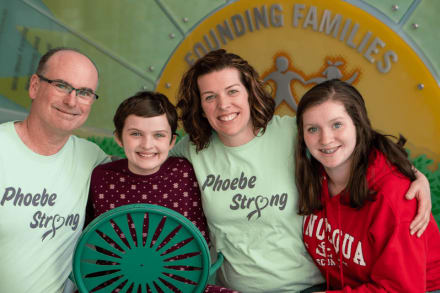
At UW Health, we use advanced procedures to treat challenging brain tumors, provide second opinions and deliver hope. These patient stories show how our brain tumor expertise changes the outcome for our patients.
Locations
We offer specialized brain tumor care at UW Health clinics in Madison, Wis., and Rockford, Ill.
Meet our team
The brain tumor team at UW Health includes experts in brain tumors, cancer, neurology and neurosurgery.